
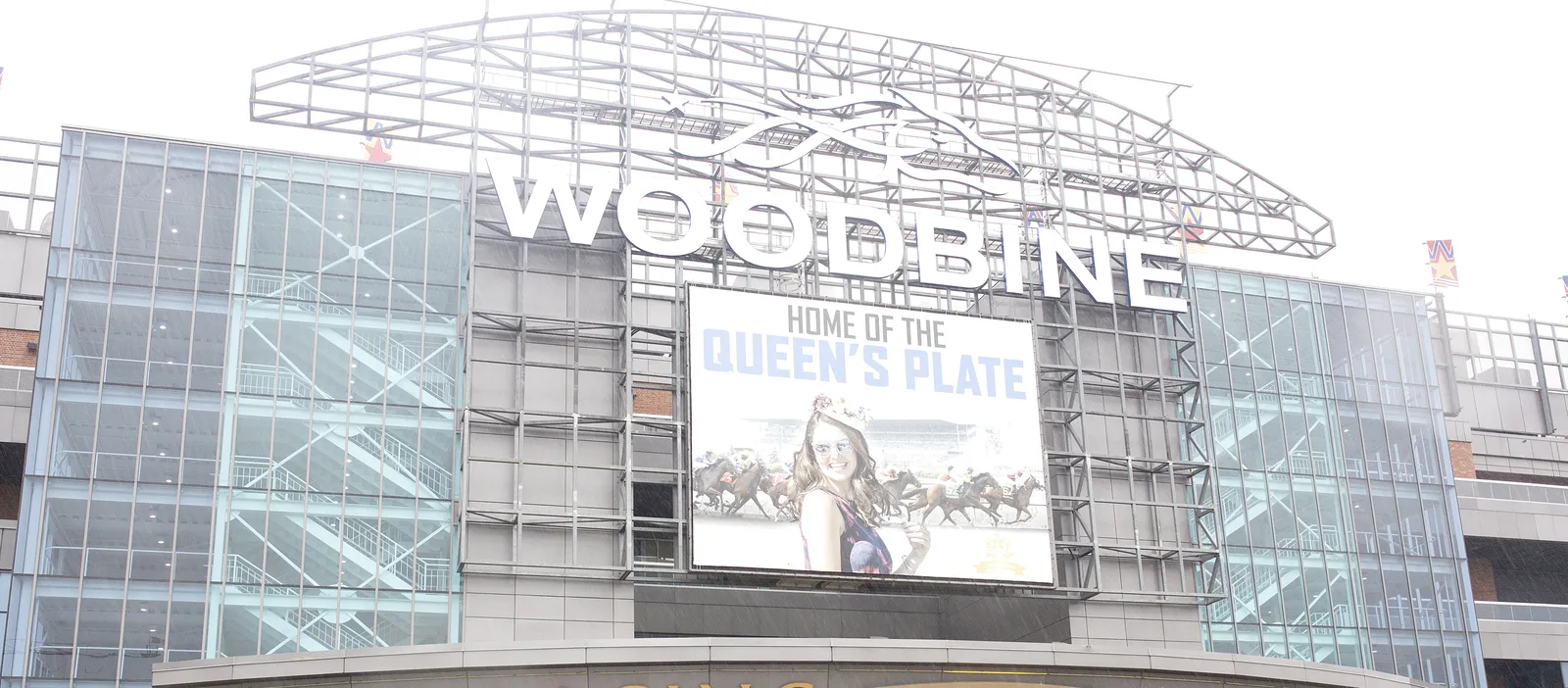
From Old Woodbine to New Woodbine
Toronto's racing history at the Woodbine name goes back to 1874, when a track by that name opened on Queen Street East in the city's east end. That original venue hosted thoroughbred racing for decades and staged the Queen's Plate — then run as the King's Plate — long before the current grounds existed. In the 1950s, the Ontario Jockey Club, led by the Canadian breeder and businessman E.P. Taylor, set out to bring Toronto racing up to the standard of the continent's leading tracks. Taylor's plan centred on buying up several competing local venues — Hamilton, Thorncliffe, Long Branch, Dufferin and Stamford — and consolidating their racing charters into a smaller number of larger, better-built tracks: Fort Erie, Greenwood, and a new facility to be built from scratch in Etobicoke.
That new facility opened on 780 acres of what was then open farmland on June 12, 1956, and was informally known as "New Woodbine" for its first years, to distinguish it from the older Queen Street track. The original venue's Thoroughbred racing wound down through the 1950s and 60s, and its site was renamed Greenwood Raceway, continuing to host harness racing into the early 1990s before closing in 1993. Once that older track's operations ended, Ontario Jockey Club retired the "New Woodbine" name and the Etobicoke track formally became simply Woodbine Racetrack — the name it still carries.
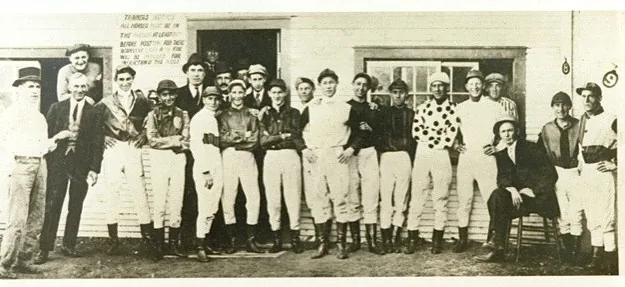
Jockeys and stable hands at the original Woodbine Race Track, 1914. Public domain, courtesy of the Watts/Williams family archives, via Wikimedia Commons.

The King's Plate crowd at the original Woodbine grounds, circa 1921. Public domain, Archives of Ontario, via Wikimedia Commons.
Building the New Woodbine
The Etobicoke grandstand was designed by architect Earle C. Morgan working alongside Arthur Froelich, an American racetrack designer who had also planned Hollywood Park and Garden State Park in the United States. Construction ran through 1955 and 1956 at a cost of roughly CA$13 million — about $149 million in today's dollars — and the finished facility was built to seat 40,000 spectators, with stabling for 1,000 horses, training tracks, and grounds landscaped with infield ponds and waterfalls. The building's design brought as many spectators as possible close to the finish line, a layout choice that earned the project a Mention from the Massey Medals for Architecture in 1958, one of Canada's earliest national architecture prizes.
One detail that still sets Woodbine apart from most North American tracks is the length of its home stretch: at 1,440 feet, it runs about 30 percent longer than the 1,097-foot stretch at Belmont Park in New York, giving closers more room to make a late run and spectators a longer, more suspenseful view of the finish. The grandstand has been renovated and expanded several times since 1956, most visibly through the addition of glass-curtain-wall sections that now wrap much of the building's upper floors, alongside the original steel-framed roof structure. Paddock and walking-ring areas sit near the grandstand entrance, where horses are saddled and paraded before each race — a layout shared with many mid-century tracks of the same architectural generation.
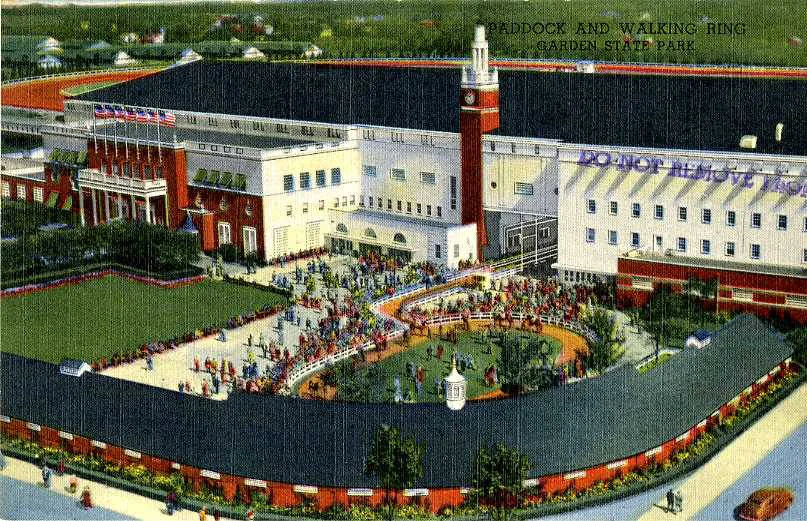
Not a photo of Woodbine — the paddock and walking ring at Garden State Park in New Jersey, another mid-century track designed by Arthur Froelich, one of the two architects behind Woodbine's original layout. Public domain, via Wikimedia Commons.
Woodbine is also unusual among North American tracks for hosting two different disciplines of racing on the same property: it is set up to stage both thoroughbred and standardbred (harness) racing programs, sometimes on the same grounds in the same era, a legacy of the original 1950s consolidation that folded several older tracks' charters into one site. Most recently, a hotel building was added to the grounds in 2023 as part of a broader redevelopment of the property, extending the site's footprint without altering the core grandstand and track that have defined Woodbine since 1956. Our hotel guide has a general overview of what visitors can expect there.
Quick facts
- Opened
- June 12, 1956
- Architects
- Earle C. Morgan & Arthur Froelich
- Original capacity
- 40,000 spectators
- Home stretch
- 1,440 feet
- Racing surfaces
- Dirt oval, E.P. Taylor Turf Course, inner turf course
- Address
- 555 Rexdale Blvd, Etobicoke
The Queen's Plate
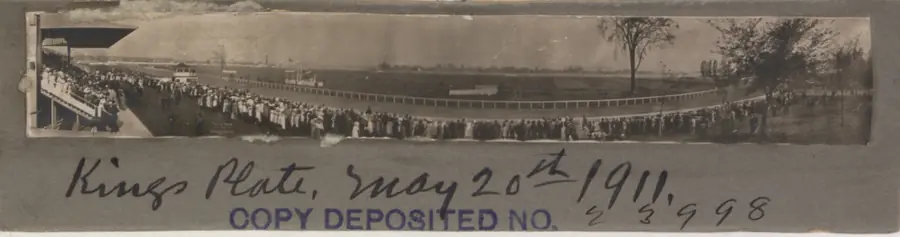
The King's Plate, May 20, 1911. Public domain, via Wikimedia Commons.
First run in 1860, the race known today as the Queen's Plate (and historically as the King's Plate, depending on the reigning monarch) is Canada's oldest continuously held thoroughbred stakes race and one of the oldest of its kind in North America. It predates Woodbine Racetrack itself by nearly a century, having been run at earlier Toronto-area tracks — including the original 1874 Woodbine — before moving to the current grounds after the 1956 opening. Restricted to three-year-old horses bred in Canada, it forms the first leg of the Canadian Triple Crown, followed by the Prince of Wales Stakes and the Breeders' Stakes, the latter also run at Woodbine.
The Queen's Plate has drawn royal attendance twice in living memory: Queen Elizabeth II attended the 100th running on June 30, 1959, not long after New Woodbine opened, and returned for the 151st running on July 4, 2010. It remains the marquee event on the Woodbine calendar, typically drawing the single largest crowd of the racing season to the grandstand, and sits alongside a full year of other stakes racing at the track.
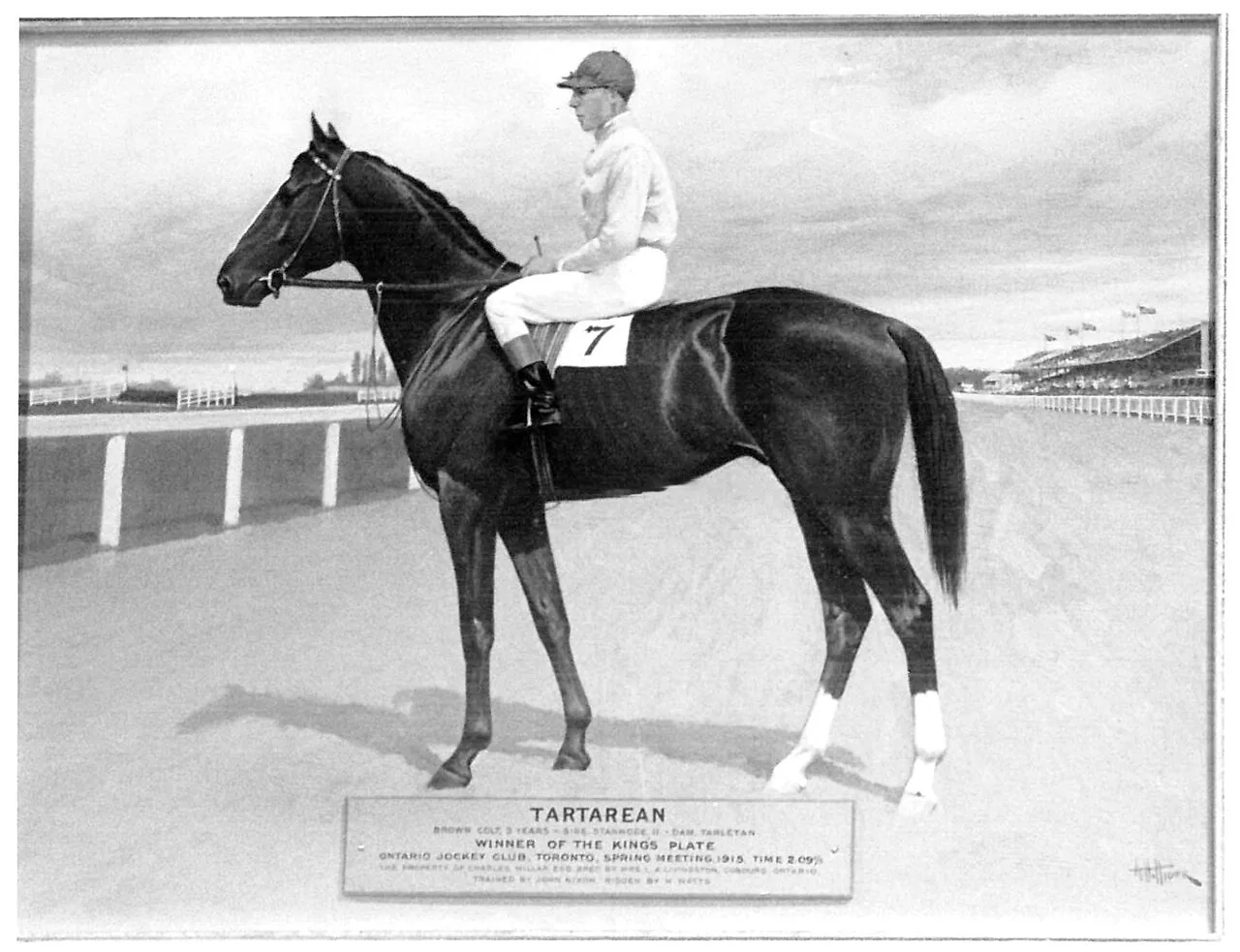
Tartarean, ridden by jockey Harry Watts, winner of the 1915 King's Plate. Public domain, courtesy of Woodbine Archives and Hall of Fame, via Wikimedia Commons.
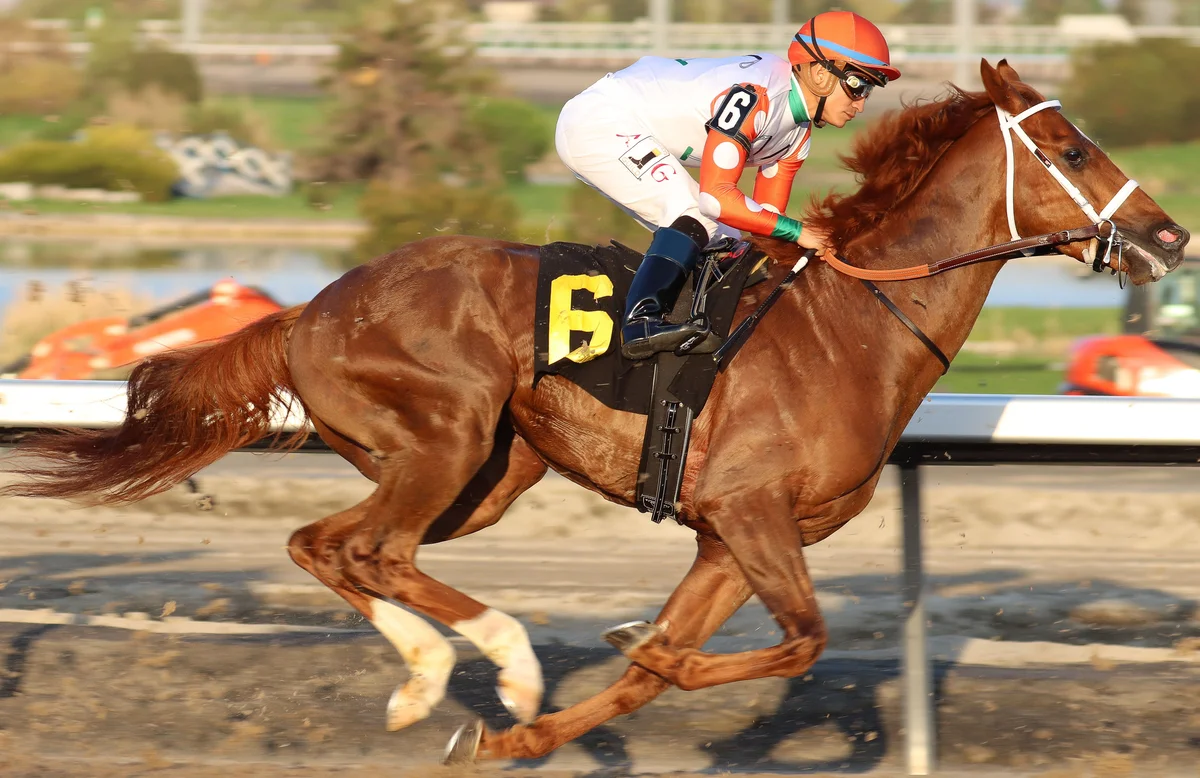
Racing at Woodbine Racetrack. Photo by Alan Garcia via Wikimedia Commons, CC BY-SA 4.0.
Beyond the Plate: International Turf Racing
Woodbine's racing calendar extends well past the Queen's Plate. The E.P. Taylor Turf Course, a 1½-mile grass course named for the same E.P. Taylor who helped build the track, opened in 1994 and quickly built a reputation as one of the strongest turf circuits in North American racing; it underwent a comprehensive renovation completed in 2025. The course hosts four Grade 1 stakes on an autumn program known as Turf Champions Day — the Woodbine Mile, the E.P. Taylor Stakes, the Natalma Stakes and the Summer Stakes — each a Breeders' Cup "Win and You're In" qualifying race, followed a few weeks later by the Grade 1 Canadian International Stakes.
The Woodbine Mile in particular has become one of the sport's best-known turf races for three-year-olds and up, run each September over a flat mile and regularly drawing international runners looking to qualify for the Breeders' Cup Mile later that autumn. Woodbine has also hosted major events on loan from elsewhere in the sport's calendar, including the Arlington Million in 1988 and the Breeders' Cup itself in 1996 — evidence of the track's standing within North American racing well beyond its own home-grown stakes program.
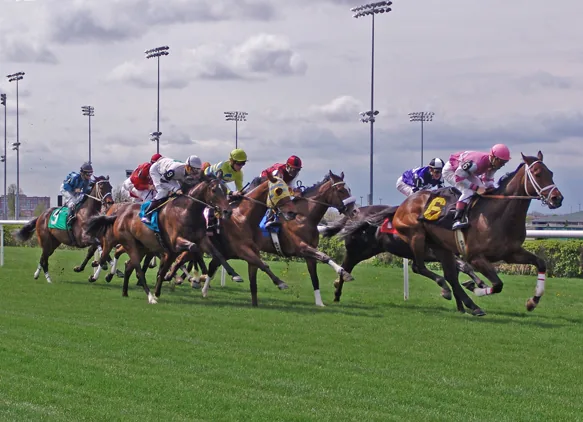
The E.P. Taylor Turf Course. Photo by Frakture, Wikimedia Commons, public domain.
Notable Figures and the Hall of Fame
The Canadian Horse Racing Hall of Fame was founded in 1976 to recognize people and horses who shaped the sport in Canada, and since 1997 it has had a permanent home at Woodbine's west entrance, with trophies, racing silks, old programs and bronzed horseshoes on display alongside inductee biographies. A bronze statue near the grandstand honours Avelino Gomez, one of the most celebrated jockeys in Canadian racing history and among the earliest inductees into the Hall of Fame — a small but frequently photographed landmark for visitors making their way in from the parking areas.
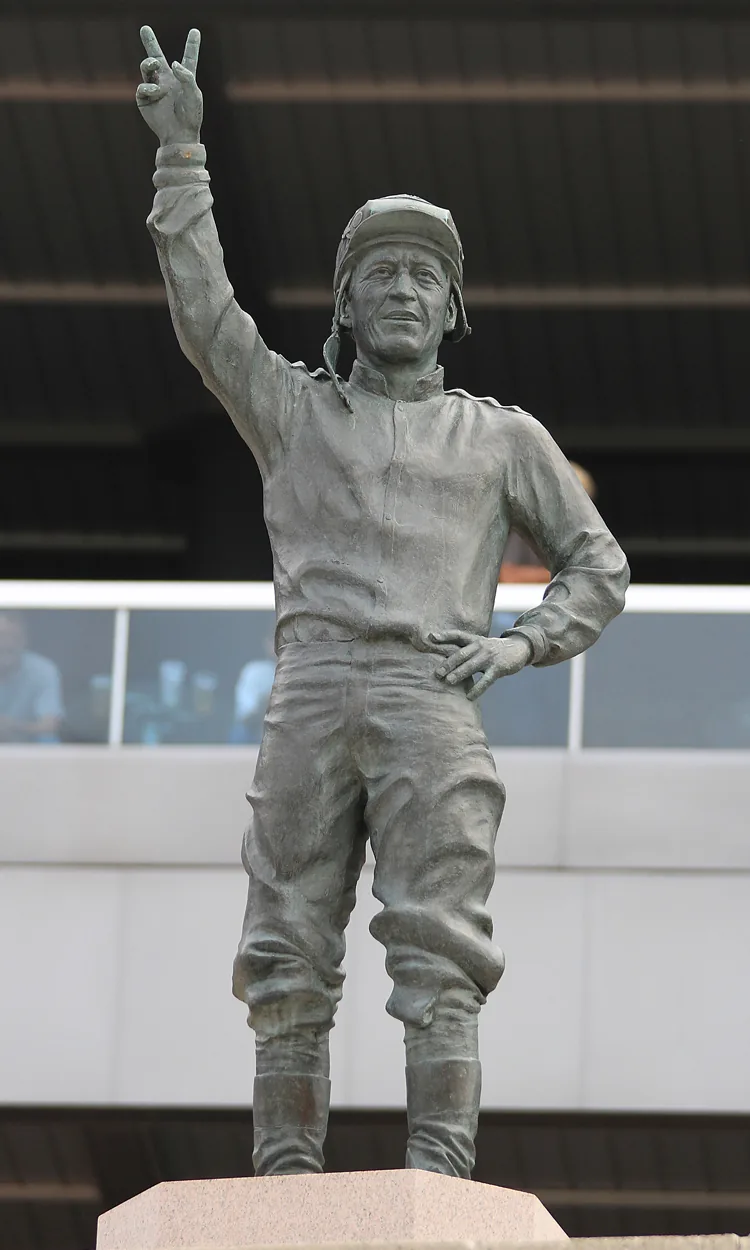
Statue of jockey Avelino Gomez at Woodbine Racetrack. Photo: Mike F. Campbell, Wikimedia Commons, CC BY-SA 3.0.
Seven Decades on the Same Grounds
The grounds have hosted more than racing over the decades. Woodbine served as a venue for the 1976 Summer Paralympics, held in Toronto the same year as the Montreal Olympics, and the property has been continually modernized since — a GPS-based timing system was introduced in 2018, and a new inner turf course opened for racing in June 2019, replacing what had originally been a seven-eighths-mile grass course dating to the 1956 opening. Through all of this, the basic footprint E.P. Taylor's architects laid out in the 1950s — grandstand, three racing surfaces, and paddock area — has remained recognizably the same.
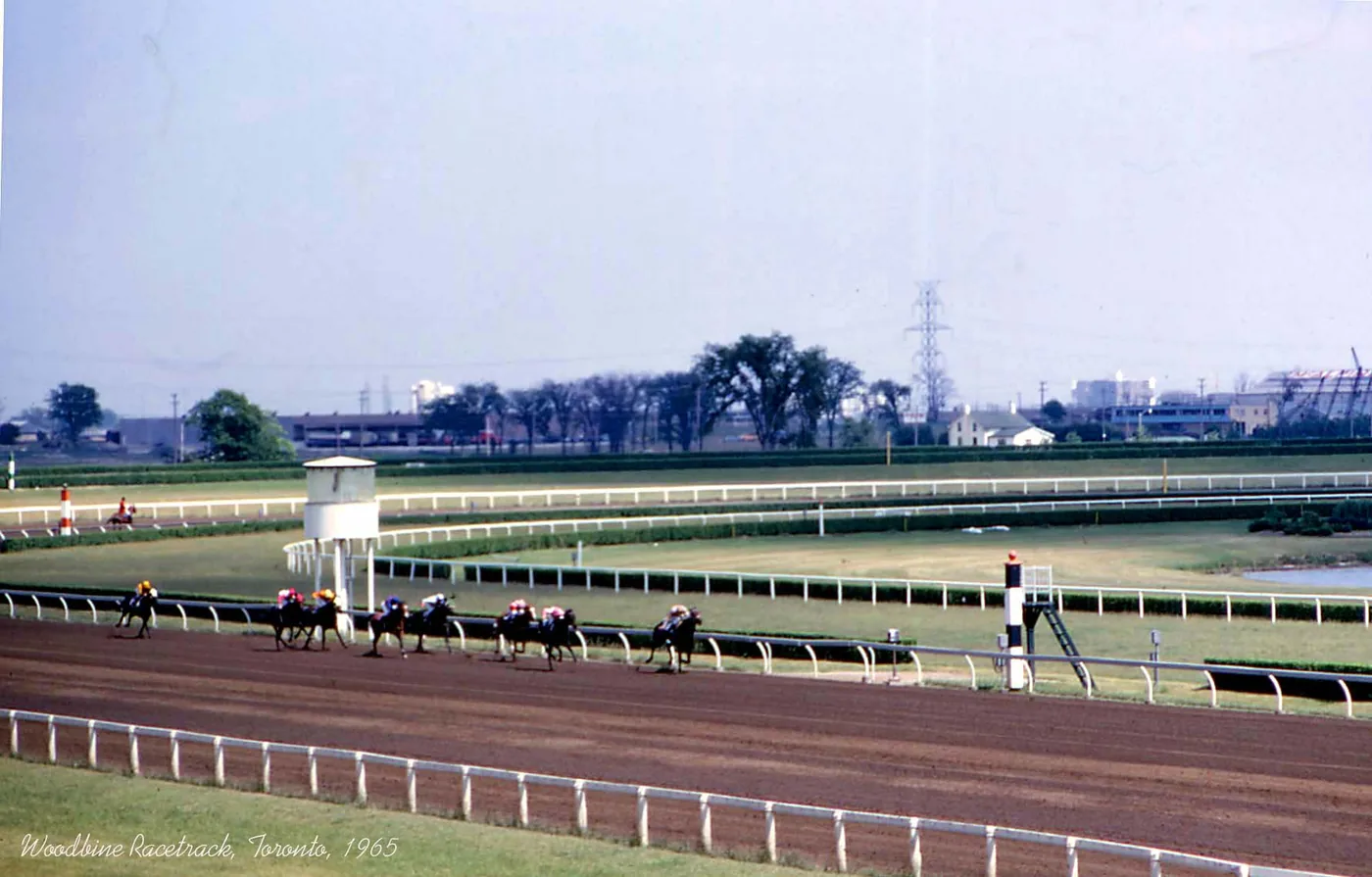
Woodbine Racetrack, Toronto, 1965. Photo: Wilford Peloquin, Wikimedia Commons, CC BY 2.0.
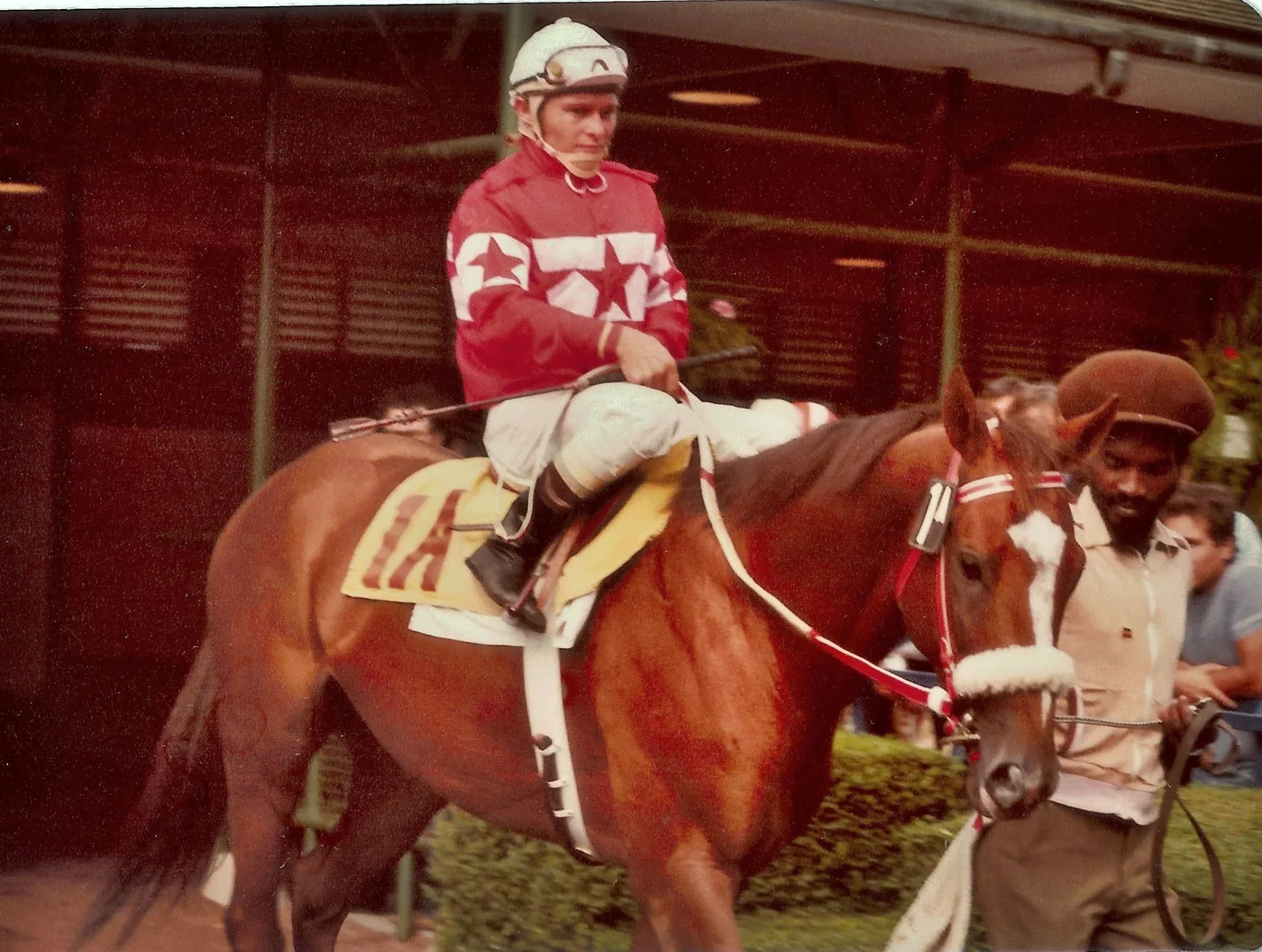
At Woodbine Racetrack, 1980. Photo via Wikimedia Commons, CC BY-SA 4.0.
A note on scope
This page covers Woodbine Racetrack as a spectator sport venue and a piece of Toronto architecture and racing history. For anyone looking for official event schedules, race results, or ticketing, the official Woodbine website is the authoritative source.